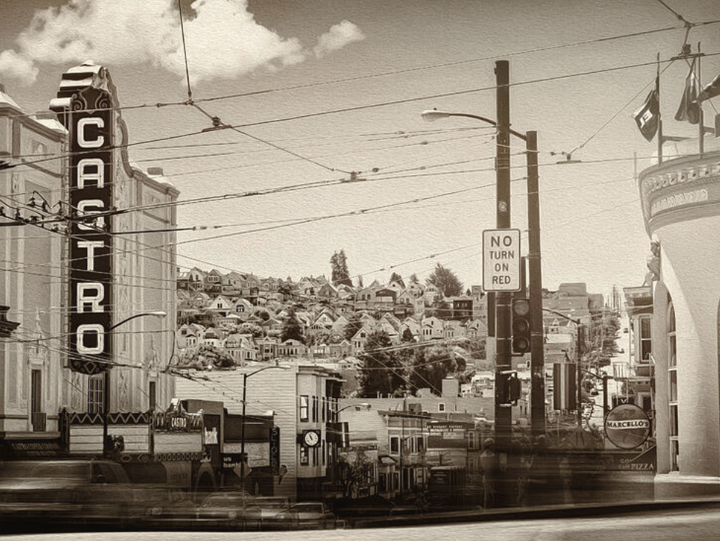
Castro and Market. Mid-century furniture, barware, collectibles and clothing, with Upper Market dealers a short walk away.
One of the most historically significant vintage neighborhoods in the United States, shaped by LGBTQ+ culture, disco-era fashion, leather culture, and four decades of community building that left extraordinary objects behind.
The Castro has one of the most distinctive vintage cultures of any neighborhood in the United States, rooted in LGBTQ+ history, shaped by decades of intentional self-expression, and marked by an approach to clothing and objects that has always prioritized meaning as much as aesthetics. Vintage shopping in the Castro is, inevitably, shopping through history.
San Francisco Vintage maps 9 verified vintage businesses in the Castro. Like the Mission, that number understates the real density, the Castro's secondhand culture extends into clothing swaps, community sales, and informal networks that don't always have storefronts but are very much present.
The Castro became San Francisco's most visible LGBTQ+ neighborhood in the 1970s, during a period of extraordinary political and cultural energy. The clothing, objects, and ephemera from that period, and from the decades of community building that followed, carry a weight and significance that goes well beyond ordinary vintage. Shopping in the Castro, at its best, is an act of engagement with that history.
"The Castro's vintage scene isn't just about style, it's about testimony. The objects here remember things. When you buy something in the Castro, you're inheriting a piece of something larger."
The Castro was ground zero for San Francisco's 1970s disco scene. Halter tops, platform shoes, satin shirts, wide-leg trousers, and the whole spectacular vocabulary of disco-era dressing surfaces here with greater frequency and authenticity than anywhere else in the city. Original pieces from the 1970s Castro nightlife scene are historically significant objects, not just vintage fashion.
The Castro's leather culture, which developed parallel to its mainstream LGBTQ+ identity, produced a distinctive aesthetic that has influenced fashion globally. Original leather goods, western wear, and the related clothing categories that defined the neighborhood's look in the late 1970s and 1980s appear in Castro vintage shops at prices that still, remarkably, undervalue what they are.
Buttons, posters, handbills, newspapers, photographs, and objects from the political movements centered in the Castro, Harvey Milk's campaigns, AIDS activism, marriage equality, are historically significant primary sources as well as vintage collectibles. Some of the most important objects in this category are still circulating through Castro secondhand shops and estates.
The Castro's residential housing stock, a mix of Victorians and early 20th-century apartment buildings, has produced a reliable flow of household vintage for decades. Art deco and mid-century pieces in particular appear with consistency in Castro estate sales and shop inventories.
Use the San Francisco Vintage Maps directory for a current, verified list of Castro vintage businesses. Subscribe to the San Francisco Vintage Weekly newsletter for Castro estate sale and event notifications.
That is the long version of Castro. The short one, with the shops on the map, is above.